
Huchuy Qosqo Walk:Architecture and History
The architecture of Huchuy Qosqo, one of the most important archaeological sites in the Sacred Valley of the Incas, stands out for its historical, architectural, and cultural value. This site reflects the high level of technical knowledge achieved by the Incas in the use of building materials and adaptation to the natural environment. Its strategic location, as well as its complex architectural organization, make it an outstanding example of Inca urban planning.
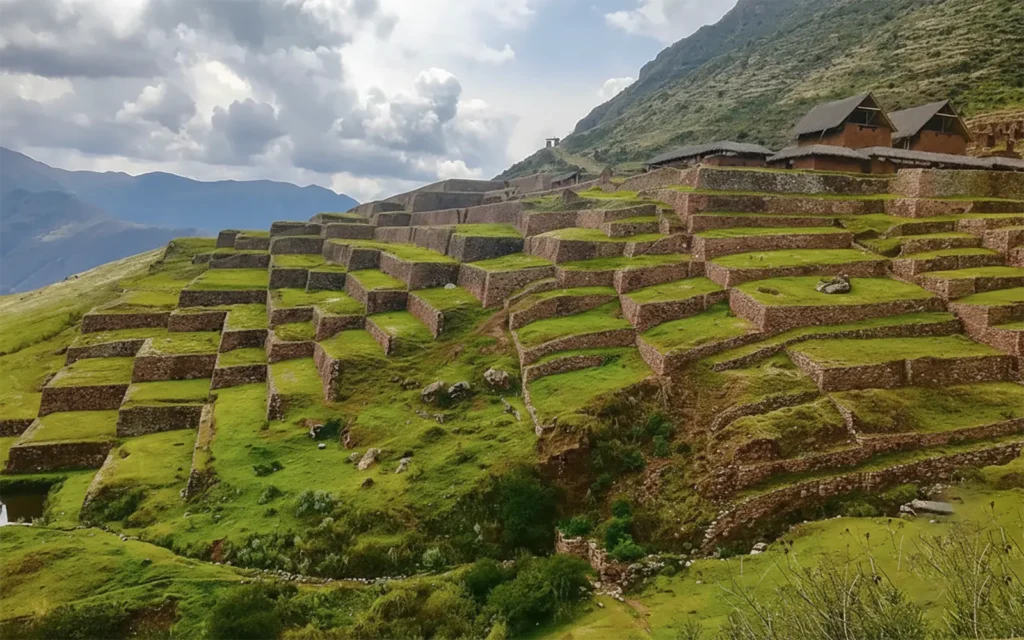
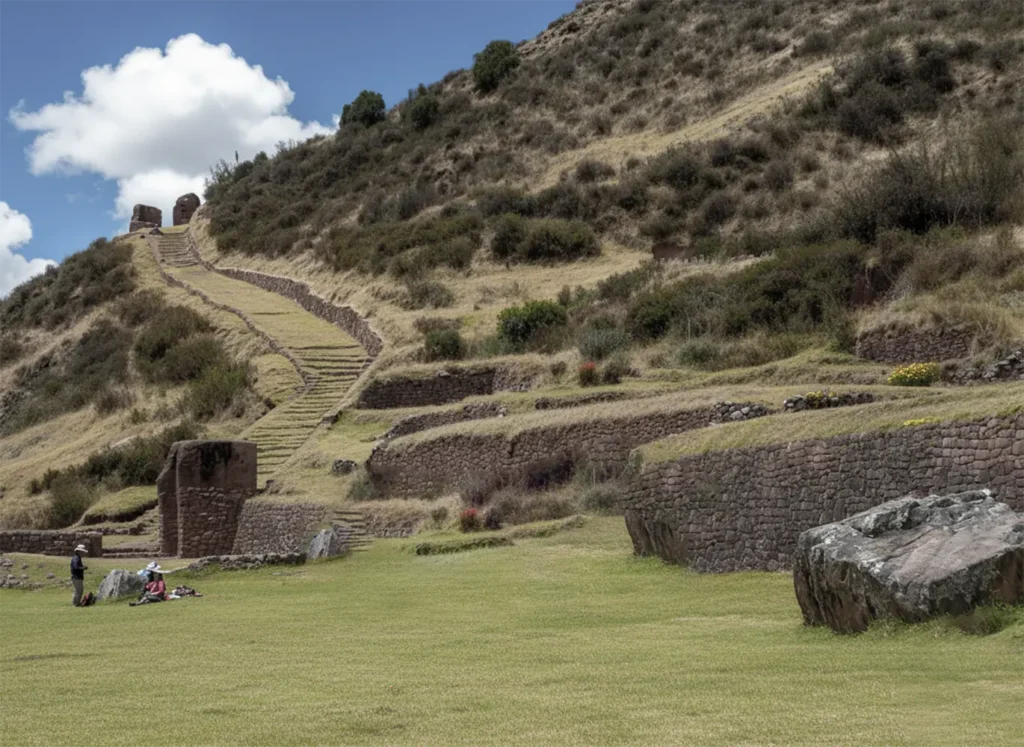
Table of Contents
Location and meaning
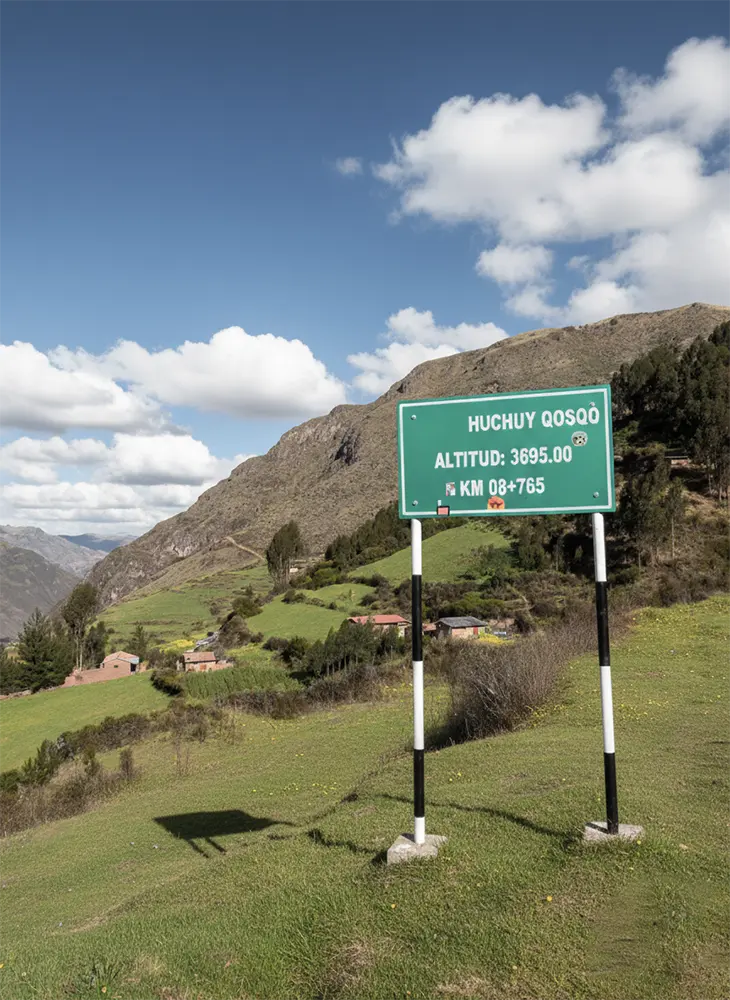
It is located in the district and province of Calca, department of Cusco, approximately 5 kilometers south of the city of Calca.
Etymologically, the name Huchuy Qosqo comes from Quechua: huchuy, which means “small,” and qosqo, the name of the capital of the Inca Empire. Therefore, its meaning translates as “little Cusco,” according to historian Luis A. Pardo.
According to ethnohistorical sources compiled by chroniclers from the quipucamayoc, the original name of the site during the Inca period would have been Haquihahuana
Historical background
One of the first chroniclers to mention this place was Father Bernabé Cobo, who notes that the ninth Inca, Viracocha Inka, in his process of territorial expansion, reached the Calca Valley, located about four leagues from Cusco. The construction of Huchuy Qosqo is attributed precisely to Viracocha Inka, who, finding himself at an advanced age, decided to retire from Cusco and settle in Caquia Xaquixaguana. Here he ordered the construction of a new llacta, where he spent the last years of his life.
During the colonial era, Viceroy Francisco de Toledo commissioned Pedro Sarmiento de Gamboa to research the history of Peru. This chronicler recounts that Viracocha Inca managed to expand the empire beyond Cusco, conquering the Calca Valley and the Caquia Xaquixaguana area.
Sarmiento de Gamboa also mentions that, after the death of Inca Viracocha, his body was buried and mummified in this place. Later, Gonzalo Pizarro found the remains and ordered them to be burned. The ashes were collected by Viracocha Inka’s panaka and kept in a small jar, where they continued to worship him through ceremonies and offerings.
Architectural features
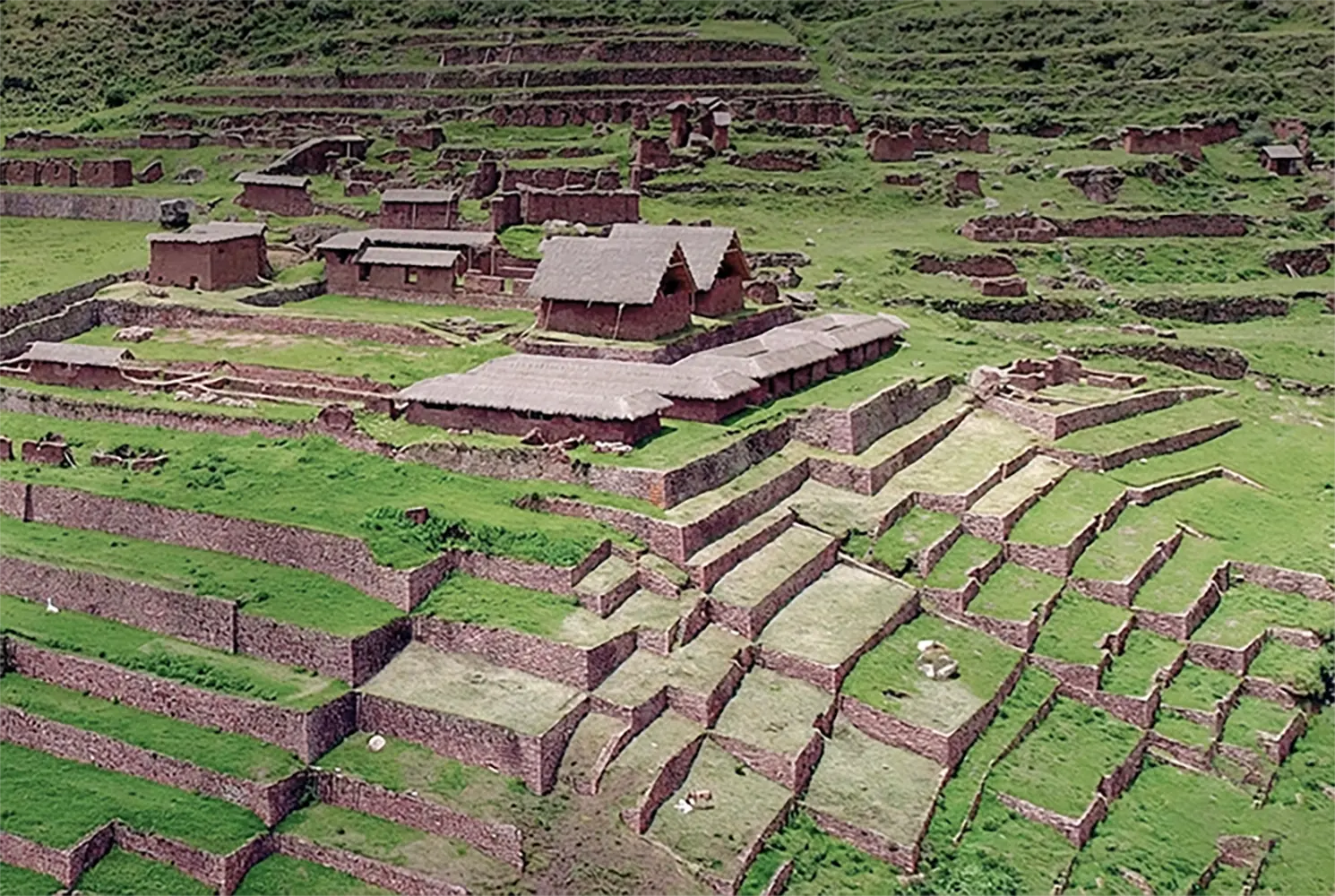
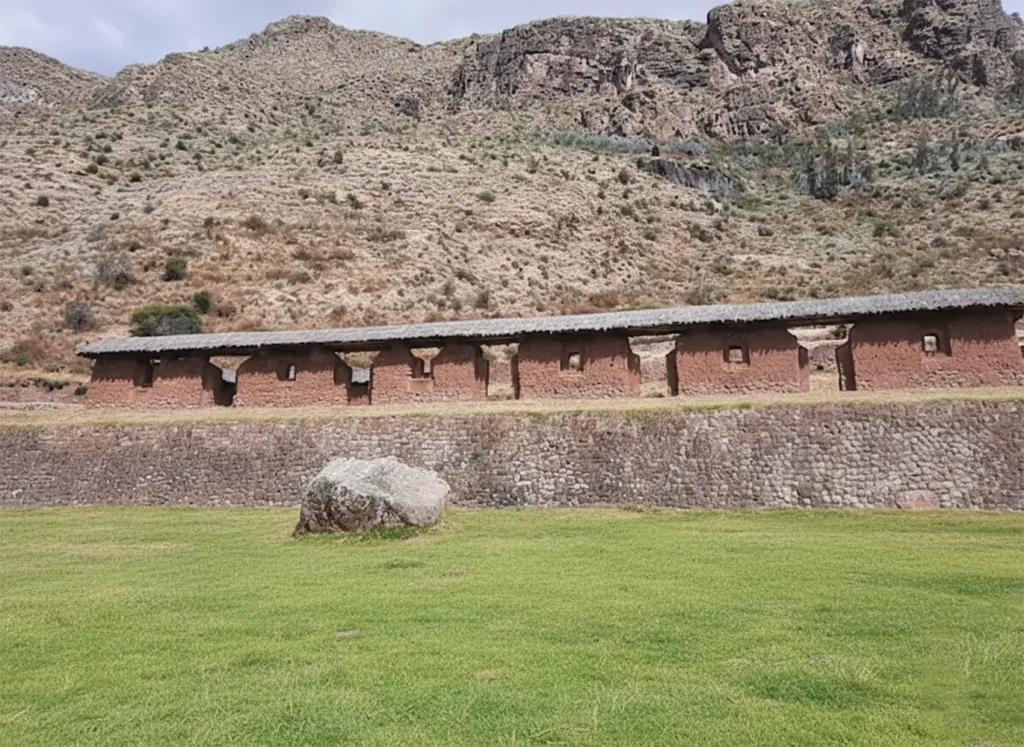
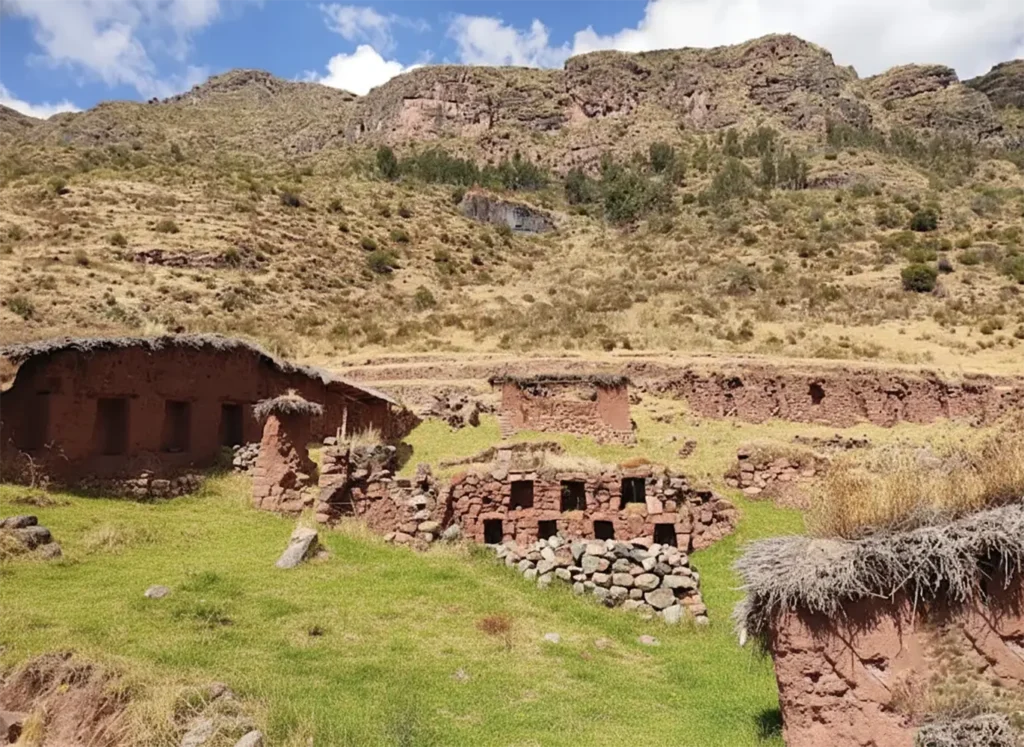
The construction of Huchuy Qosqo consists mainly of stone elements used in the foundations and superstructure. The walls are built of stone and have a core of mortar mixed with medium-sized stones. In several rooms, there is a covering of cushion-shaped stones, evidence of the refined construction work of the Incas.
The roofs were made of stone and wood structures, using native species such as kiswar, as well as plant-based binding elements. The use of adobe is also noteworthy, especially in the upper walls, which still withstand inclement weather, seismic activity, and the passage of time.
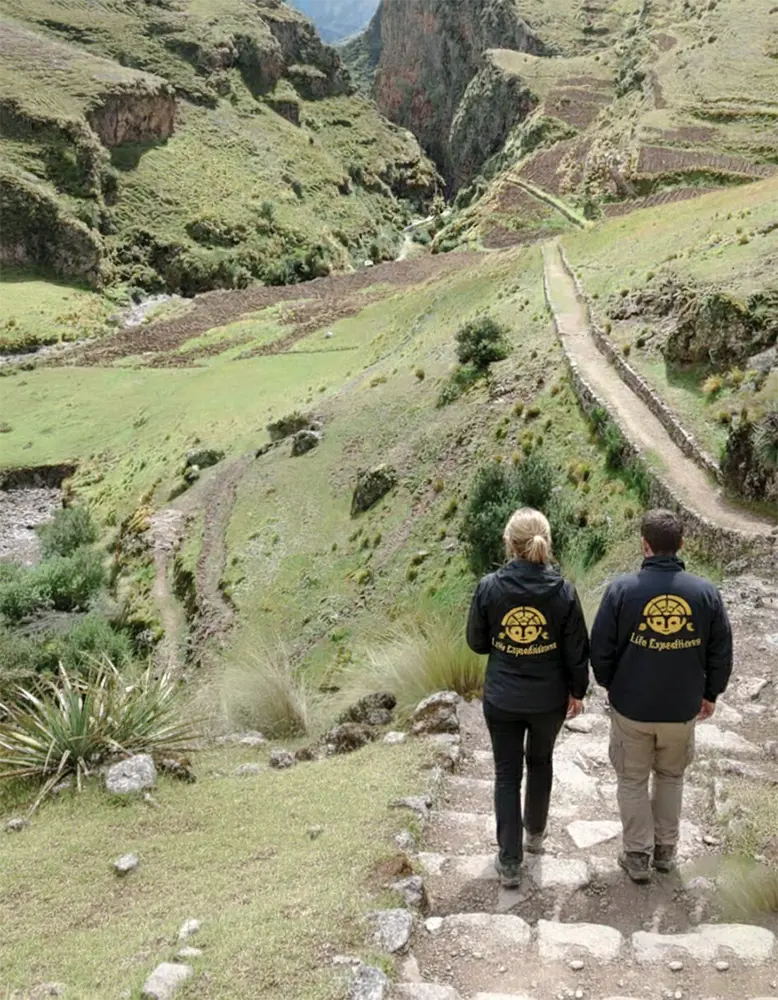
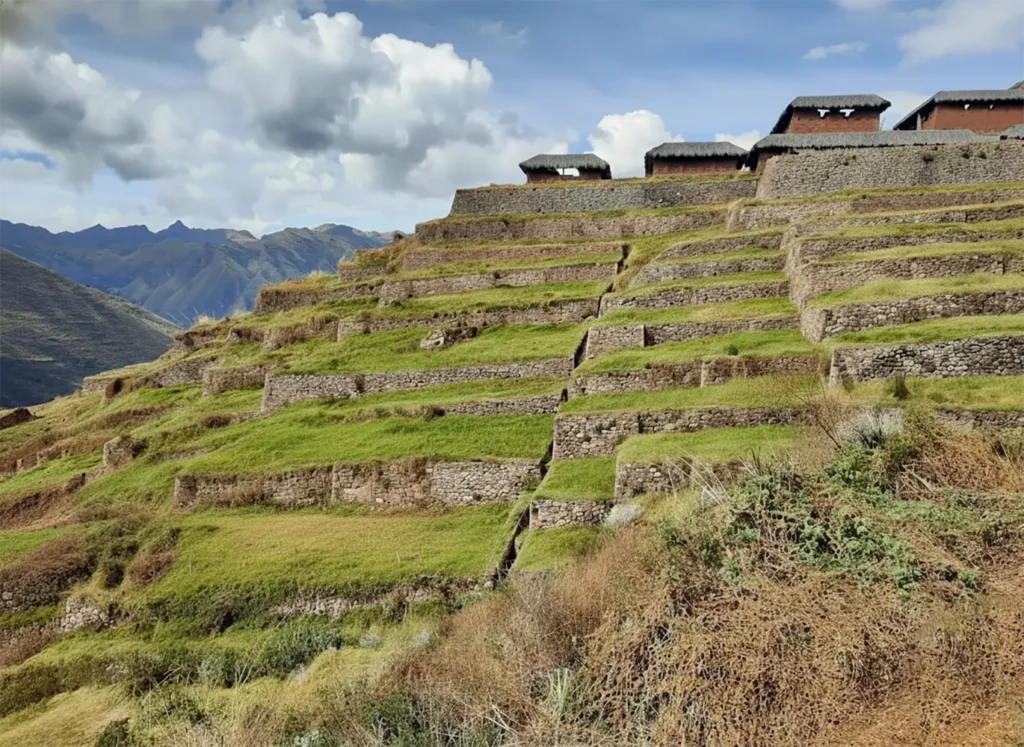
The site has a complex system of agricultural terraces, accompanied by horizontal and vertical channels that allowed for the irrigation of crops. Stairways supported by buttresses were built to allow movement between the terraces, demonstrating a high level of hydraulic and architectural engineering.
Spatial organization of the archaeological site
Huchuy Qosqo is divided into three main sectors, each with specific characteristics and functions:
Sector A: Wasqapata Platforms
This sector consists of a series of terraces that served a dual purpose.
First, they acted as retaining walls, protecting the area from erosion caused by heavy rains, mudslides, and landslides.
Second, they had an agricultural function, allowing the cultivation of crops such as potatoes, quinoa, tarwi, and corn, which considerably expanded the productive capacity of the settlement.
Sector B: Rosas Field
Sector B is characterized by irregular topography and the presence of scattered enclosures, generally rectangular in shape. These buildings have stone walls at the bottom and adobe at the top, with one or two entrances per structure.
The site’s main plaza is located in this sector. Likewise, terraces can be seen on the hillside, among which a large rectangular enclosure measuring approximately 31 meters long by 10 meters wide stands out, with several entrances, including double-jamb openings, suggesting an administrative or ceremonial function of great importance.
Sector C
Sector C is located on the western side of the main square. It is characterized by the orderly and planned layout of its buildings, which demonstrates a high level of spatial organization.
Among these buildings, a rectangular enclosure of great importance stands out, whose location and design suggest a specialized use within the architectural complex of Huchuy Qosqo.
Conclusion
Huchuy Qosqo is a clear example of the high level of architectural, agricultural, and hydraulic development achieved by the Inca civilization. Its strategic location, the solidity of its constructions, and the complex organization of its sectors reflect the Incas’ mastery of building materials and the natural environment. Furthermore, its close relationship with the Inca Viracocha gives it exceptional historical value, making it an important cultural legacy that bears witness to the greatness of the Inca Empire in the Calca Valley.
Contact us:
With Life Expeditions, your dream trip to Peru becomes a reality. Specialists in the Inca Trail, Ausangate, Salkantay, and tailor-made packages, we take you to unique places such as:
Ready for a personalized adventure? Your adventure begins now!