
Santurantikuy – The epicenter of artisan crafts during the Christmas festivities in Cusco
The traditional Santurantikuy Fair is one of the most iconic cultural events in Cusco during Christmas. Since its beginning, this fair has brought together neighborhoods and provinces from all over Cusco. Every December 24th, they flood into the heart of the city to showcase their best artisan creations, which are absolutely packed with history, devotion, and creativity.
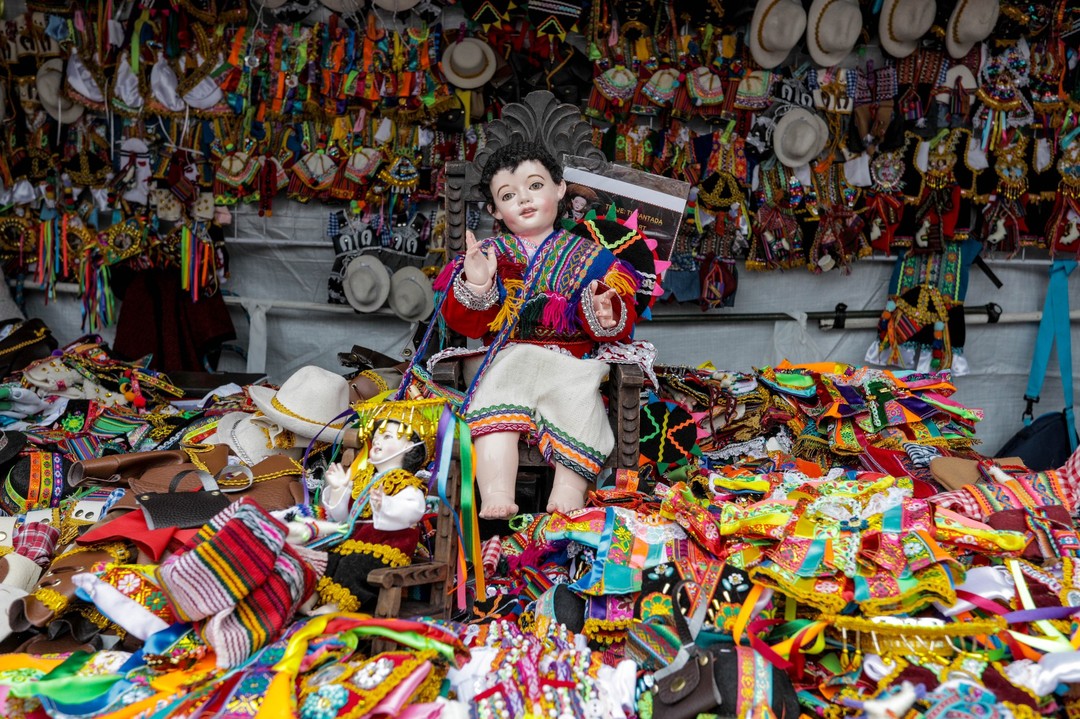
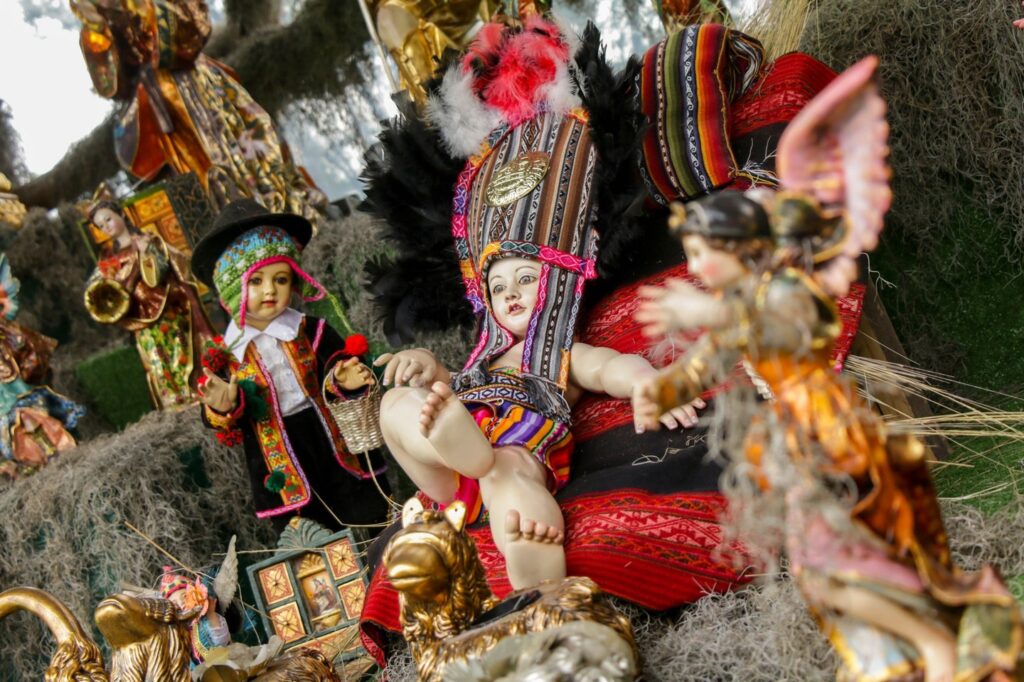
The undisputed superstar of the event is the Niño Manuelito (Baby Manuelito), the central figure who draws thousands of visitors and devotees. Year after year, they fill Cusco’s magical Plaza de Armas, transforming it into a vibrant scene of faith, art, and living tradition. Seriously, this fair is unmissable! It’s the go-to event where visitors can snag unique and special items to share with their families.
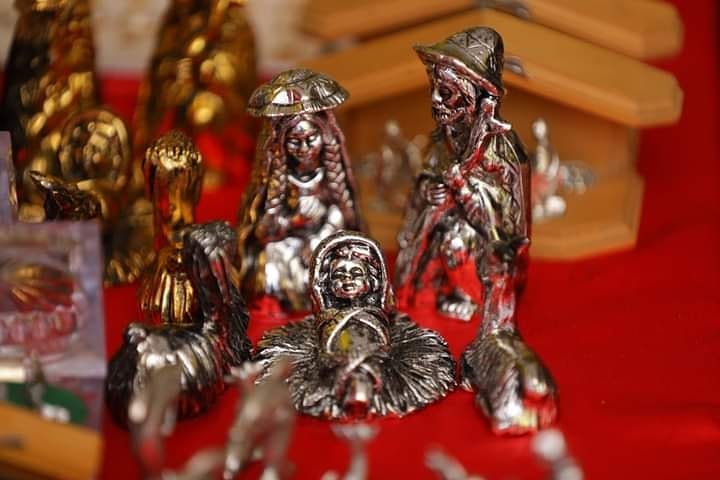
Tabla de Contenidos
Origin of the Fair and the Word “Santurantikuy”
The Santurantikuy fair gets its name from Quechua, meaning “the buying or acquisition of saints.” It’s a deeply rooted tradition among the people of Cusco and their faithful. Every year, this cultural get-together brings together artisans and believers looking to buy religious images, figures, and various handicrafts full of symbolism and spirituality.
Its origin goes way back to the 16th century. By 1834, the Santurantikuy was being held on the steps of the Cathedral, right in the Plaza de Armas. What we know for sure is that it was an initiative pushed by the Spanish to evangelize the indigenous people of the Tahuantinsuyo (Inca Empire). As the name suggests, it focused on selling images of Catholic saints.
When does Santurantikuy happen?
Santurantikuy is celebrated every year in the magical run-up to Christmas, from December 22nd to the 24th. This is when Cusco bursts with art, tradition, and color as artisans offer their best work at one of the city’s most emblematic fairs.
What You Can See at the Traditional Santurantikuy Fair
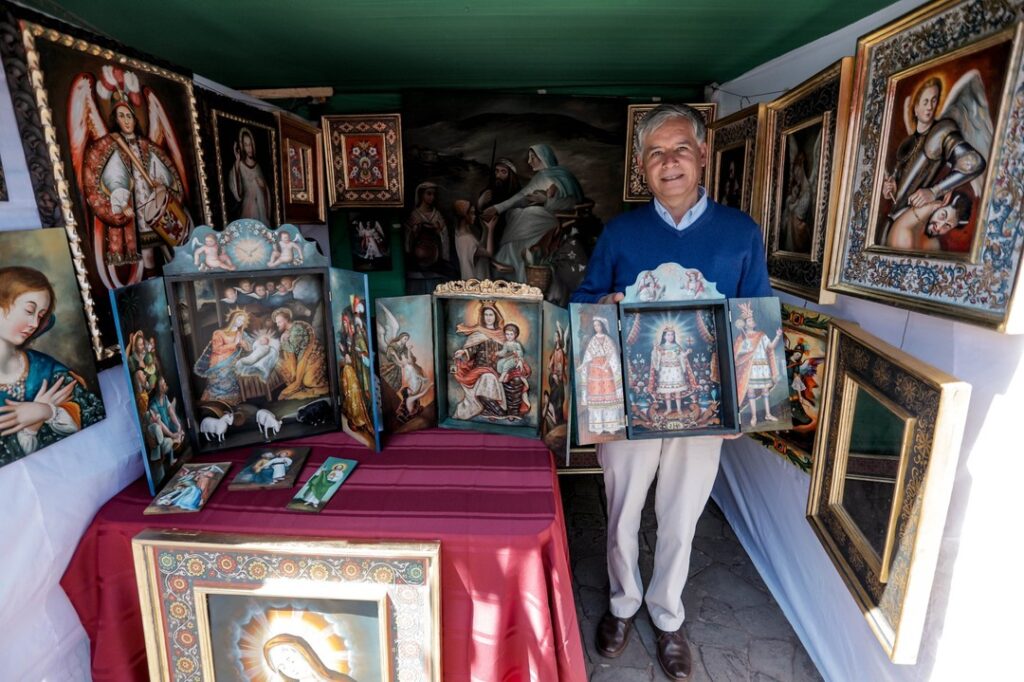
The traditional Santurantikuy fair is a perfect family day out to appreciate Cusco’s popular art. Loads of artisans exhibit sculptures, carvings, paintings (including replicas from the Cusco School), and Christmas products made with incredible detail. This fair really highlights the creativity and tradition of the artisans, making it a major cultural expression of Cusco.
The Main Highlight of Santurantikuy…
Among the many religious images offered, the figure that stands out the most is the “Niño Manuelito.” He’s considered the fair’s main symbol. All the Catholic iconography that arrived during the colonial era was adapted by the ancient capital of the Tahuantinsuyo—a process known as “Cusqueñización”. Through this cultural mash-up, the Baby Jesus adopted features unique to local art and was named Niño Manuelito, a representation deeply tied to the identity and devotion of the people of Cusco.
Hilario Mendívil
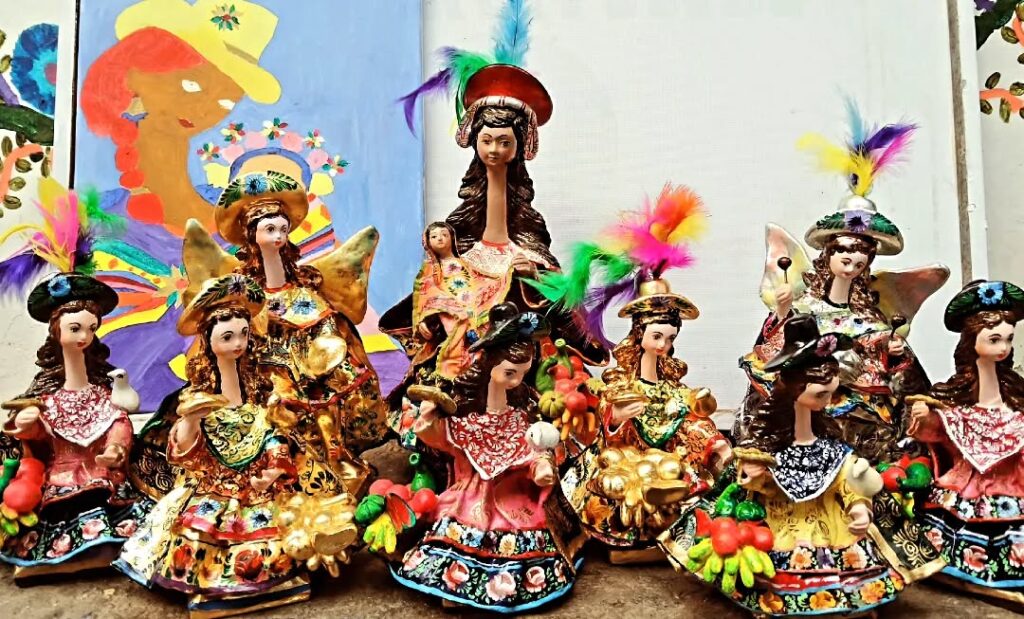
The most famous figure from the Mendívil family was Hilario Mendívil, recognized as one of the great masters of Cusco’s folk art. His artistic legacy continues through his daughter, Juana Mendívil, who inherited his creative talent and keeps the family tradition alive. The Mendívil religious sculptures have a very distinct style: the famous “saints with long necks.” This stylized feature represents spiritual elegance and has become an unmistakable signature of their work. Through these images, the Mendívil family conveys devotion, cultural identity, and the essence of Cusco’s folk art.
Luis Aguayo
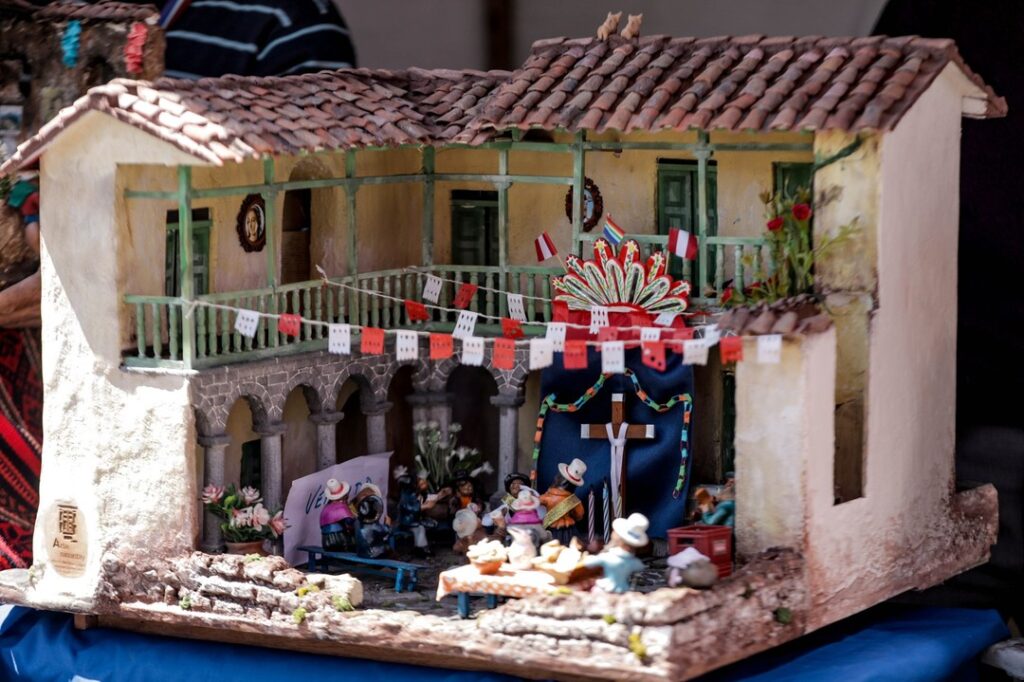
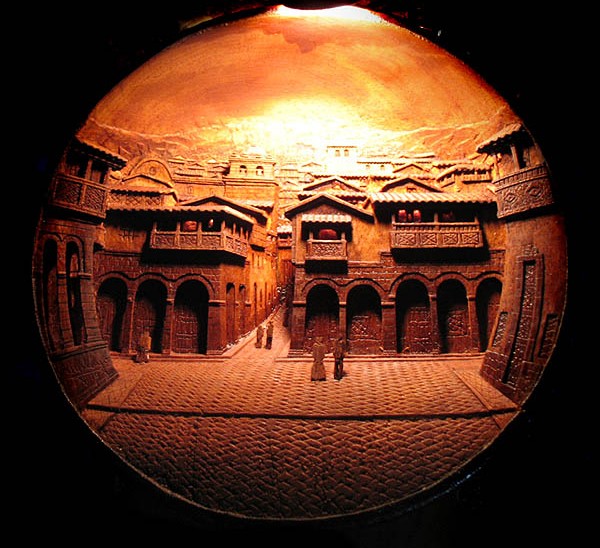
He is one of the top experts in the art of wood carving. His work captures traditional landscapes and streets of the city. Don Luis considers himself an artist passionate about Cusco, which is why he puts all his skill into portraying the city by reproducing its streets, landscapes, and archaeological ruins in miniature.
Edilberto Mérida
Born in the San Cristóbal neighborhood, he worked as a carpenter from a young age until 1961 when he started creating clay figures with a strong expressionist style that depicted the pain of the forced labor endured by indigenous people. He was known as the “sculptor of protest clay.” His works carry a deep social message and reflect the daily life and the difficult geography of the Andes.
Antonio Olave
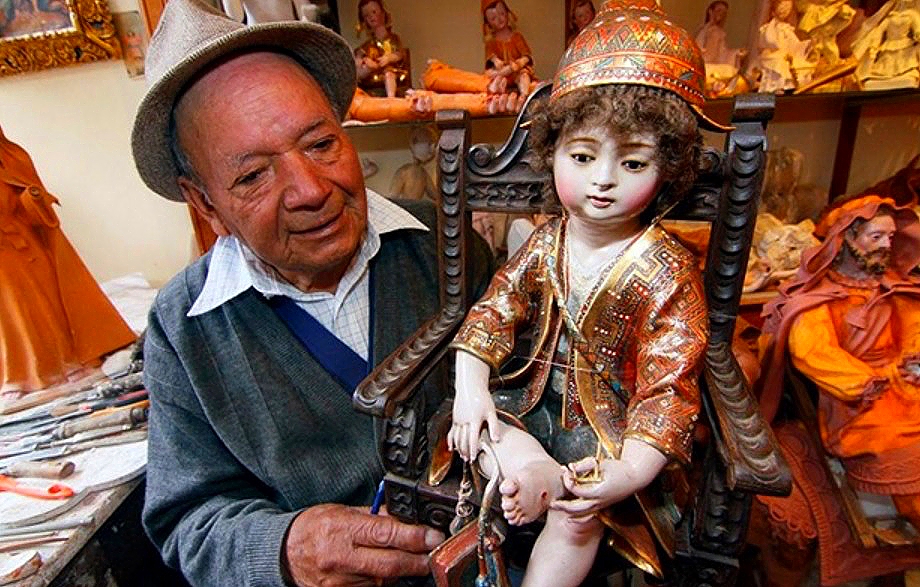
Born in Pisaq-Calca in the early 20th century, he is probably one of Cusco’s most renowned artists. Don Antonio Olave was known as the “Father of the Child of the Thorn” (Niño de la Espina), an image of the Baby Jesus with a thorn in one of his feet and a glass tear finished with surgical precision.
Conclusion
The Santurantikuy is a traditional fair that has been celebrated in the Imperial City of Cusco since ancient times. Initially, this gathering was held only on the steps of the Cathedral Temple, but over time, it grew to occupy the entire Plaza de Armas, becoming one of the most representative events of Christmas in Cusco.
Before, the fair focused exclusively on selling saints and religious images. Today, besides these pieces, visitors can find items to complete their Nativity scenes, Christmas handicrafts, and special gifts for Christmas Eve. It’s an experience packed with tradition, art, and festive spirit that unites all of Cusco!
Contact us:
With Life Expeditions, your dream trip to Peru becomes a reality. Specialists in the Inca Trail and tailor-made packages, we take you to unique places such as:
Ready for a personalized adventure? Your adventure begins now!