
Chinchero: Land of the Rainbow, cradle of Inca terracing and impressive textile art
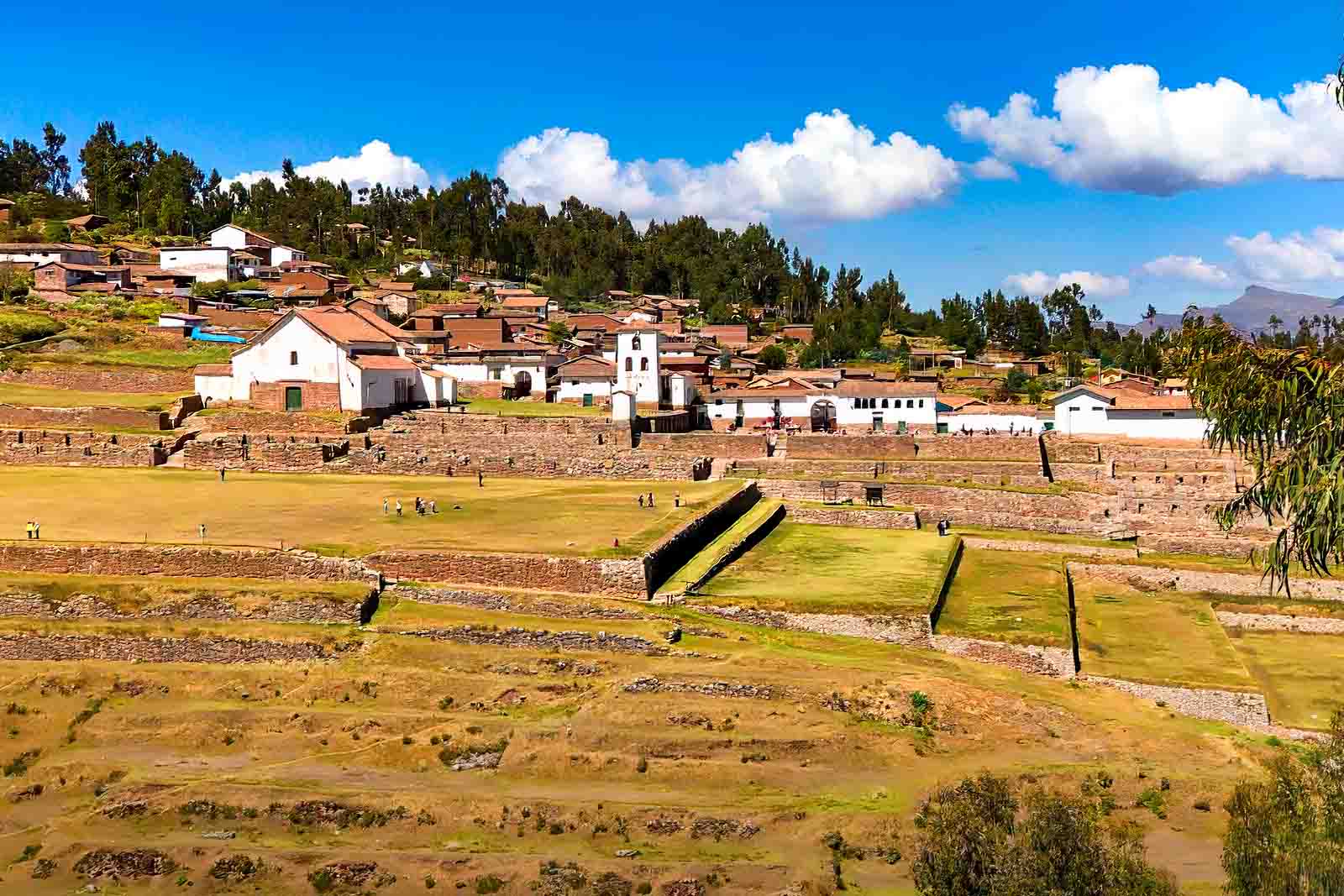
Chinchero is one of the most fascinating archaeological complexes of the Sacred Valley of the Incas. This place combines two historical eras in the same setting: on top of the imposing Inca foundations rises the colonial temple of Spanish origin, creating a unique example of cultural and architectural syncretism.
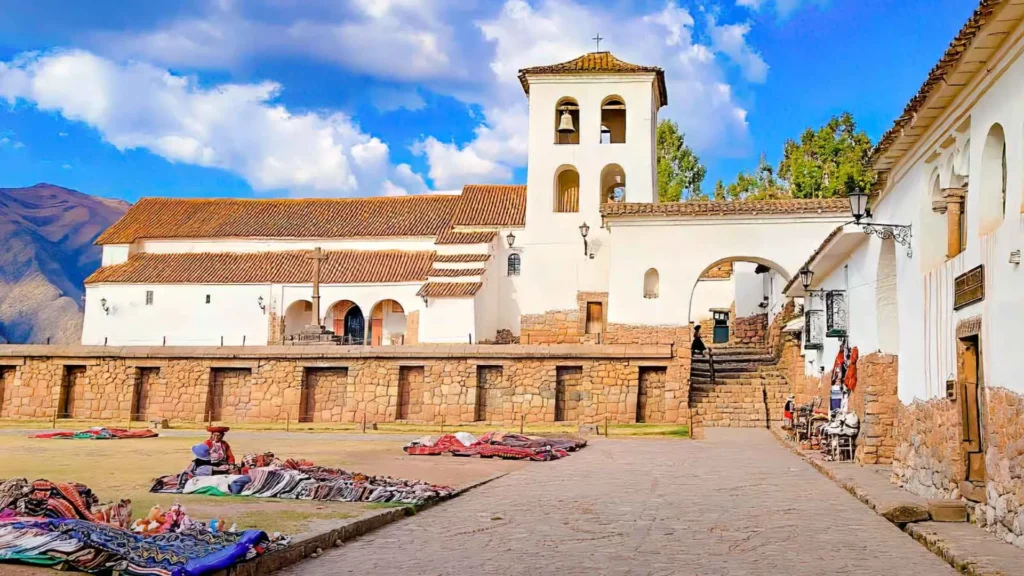
Visiting Chinchero means entering a space where Andean tradition and European influence coexist in harmony, offering travelers an enriching experience that connects past and present. In addition to its historical value, this archaeological center is an essential tourist attraction for those who wish to understand the depth of Inca culture and the mark of mestizaje in Peru.
Tabla de Contenidos
What does Chinchero mean?
The name Chinchero derives from a Quechua word [Chinchay] which means “puma,” a sacred animal in the Andean worldview.
Where is Chinchero located?
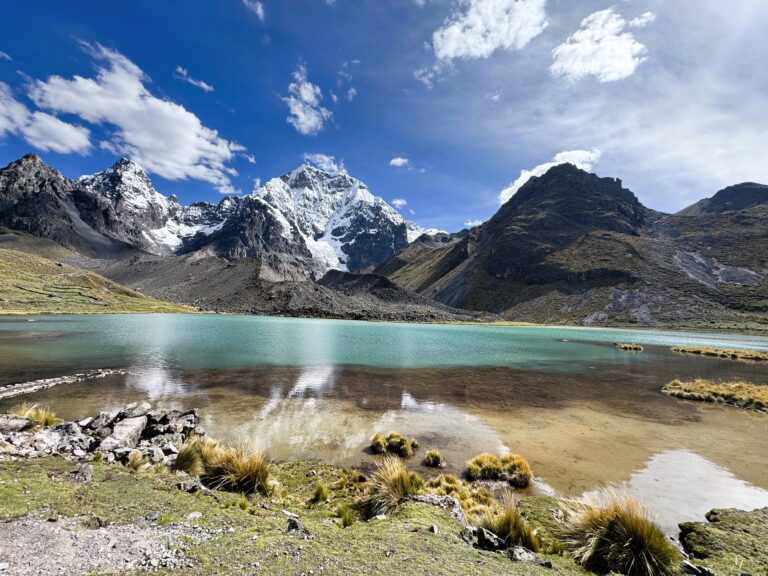
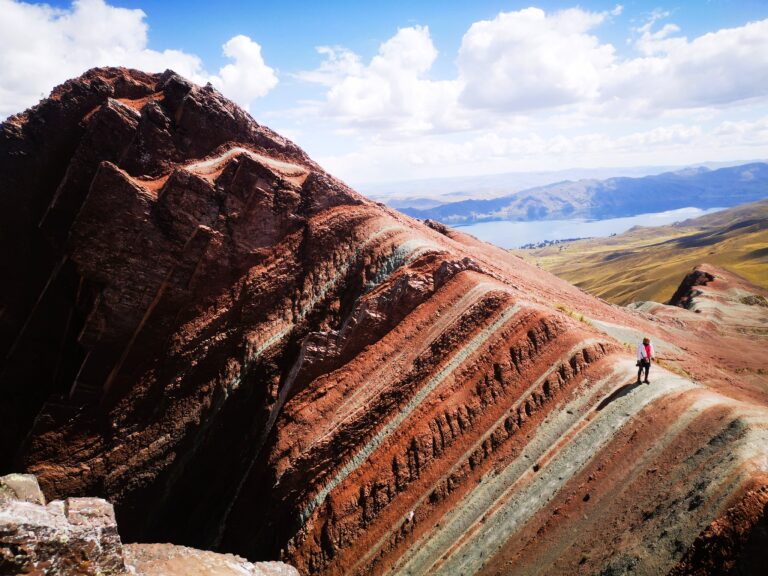
The archaeological complex of Chinchero is located 28 km northwest of the city of Cusco, at an altitude of 3,754 m.a.s.l. This place, also known as the “Land of the Rainbow,” combines impressive landscapes with a valuable historical and cultural legacy.
History
In ancient times, the first inhabitants of the area were the Ayllu Pongo and Cuper Ayllu groups, belonging to the Ayarmaca nation. Later, during the Inca period, these lands passed into the hands of Inca Túpac Yupanqui, who ordered the construction of the city, turning it into an important center. In 1536, Inca Manco Inca confronted the Spaniards and, to avoid capture, set fire to the local palace before fleeing to Yucay and finally to Ollantaytambo, where he continued the resistance. With the arrival of the conquerors, profound transformations took place, among them the construction of the Temple of Our Lady of Monserrat, symbol of the syncretism between Andean tradition and colonial influence.
Temple of Our Lady of Monserrat
The Temple of the Virgin of the Nativity is a magnificent work of colonial architecture that rises on ancient Inca walls, reflecting the cultural syncretism of the Sacred Valley of the Incas. Its interior is a true artistic treasure, as it houses valuable paintings by renowned masters of the Cusco School, among them Diego Cusihuamán, whose works stand out for their chromatic richness and deep spirituality.
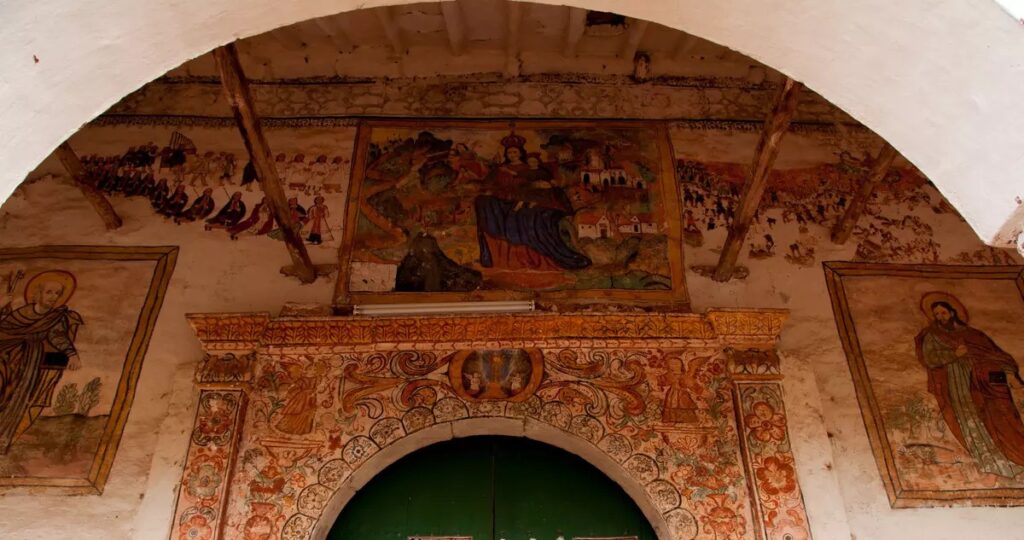
This temple is not only a symbol of Catholic faith in the colonial era, but also a space where Andean tradition and European art merge, becoming an essential tourist and cultural attraction for those who visit Chinchero.
Archaeological Complex of Chinchero
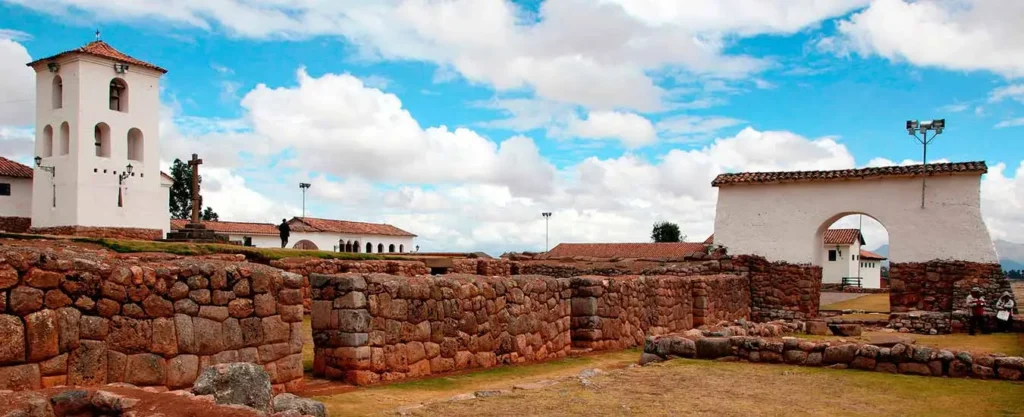
Upon entering the archaeological complex, the first thing that draws attention is the colonial temple located in the main square, accompanied by 12 niches that would have served to place idols and ceremonial figures of great importance. This space includes a main square called Capellanpampa and a wide esplanade; the square was used in Inca times for important ceremonies and also houses the residence of cacique Mateo Pumaccahua Chihuantito, a key figure in local history.
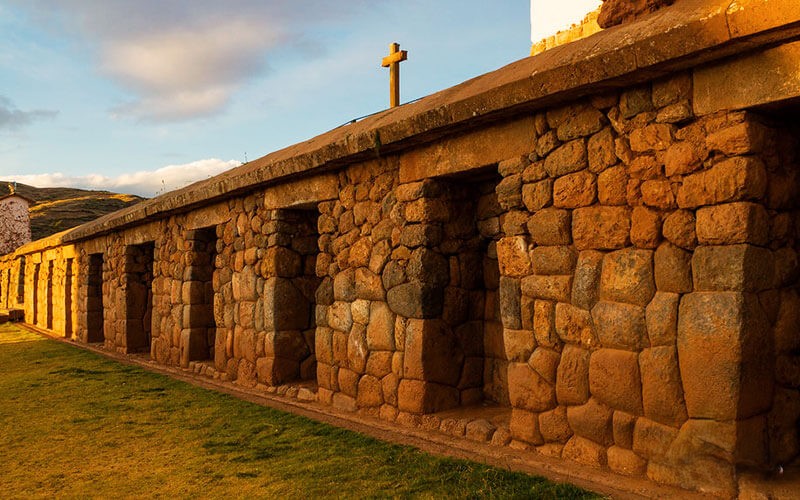
This entire layout reflects a marked cultural and architectural syncretism, since the temple was built on an ancient Inca construction, integrating Andean heritage with Spanish influence and giving rise to a unique setting where two traditions converge that still endure in memory and architecture.
Kallankas
Among the most outstanding buildings in the area were the three palaces, imposing constructions that served as the residence of Inca Túpac Yupanqui, who spent his last days there. These structures reflected the power and grandeur of the era, becoming symbols of the political and ceremonial importance the place held within the Andean world.
Wakas Puma qaqa and Teteqaqa
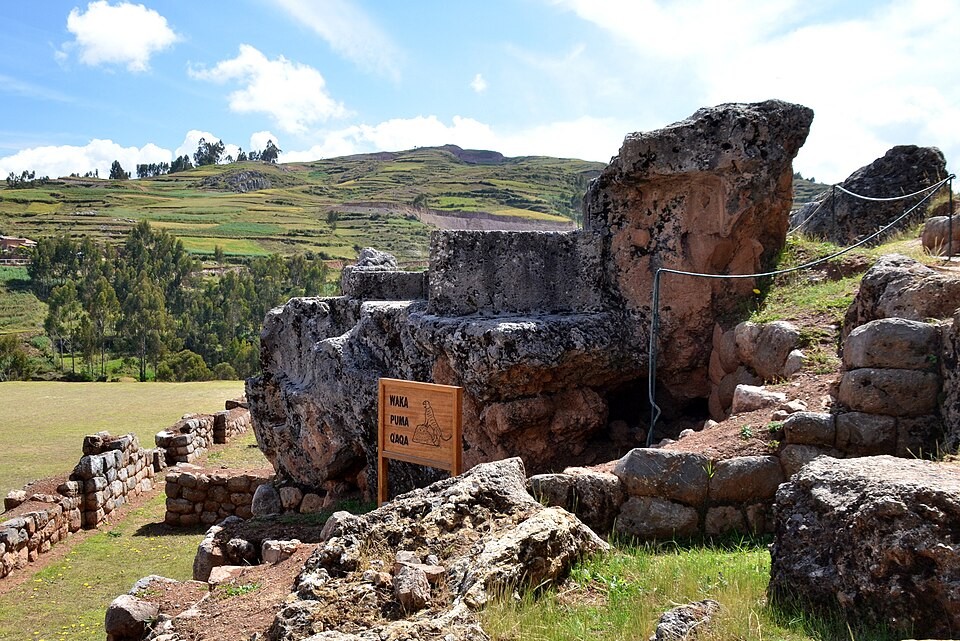
In the esplanade of the archaeological center, notable Inca constructions can be seen along with important wak’as such as Puma Qaqa and Teteqaqa. The first stands out for its two sculptures of reclining pumas, which were decapitated during the campaign to eradicate idolatries in the attempt to impose Catholicism. On the other hand, Teteqaqa corresponds to a large carved stone located among the terraces, with stepped engravings on its sides that clearly reflect the artistic and symbolic style of Inca tradition.
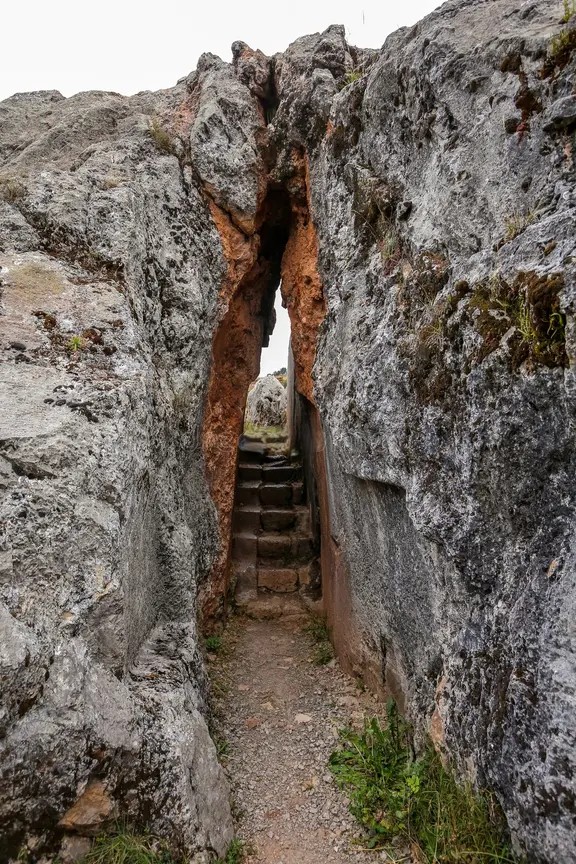
In the esplanade of the archaeological center, monumental buildings can be observed whose shapes evoke the corn of the Sacred Valley, considered by the ancient inhabitants as a symbol of fertility and abundance. These constructions reflect the deep Andean spirituality and, at the same time, the remarkable architectural mastery of the Incas, turning the place into a true cultural and tourist hub essential for those who wish to know the richness of ancestral heritage.
Agricultural Terraces of Chinchero
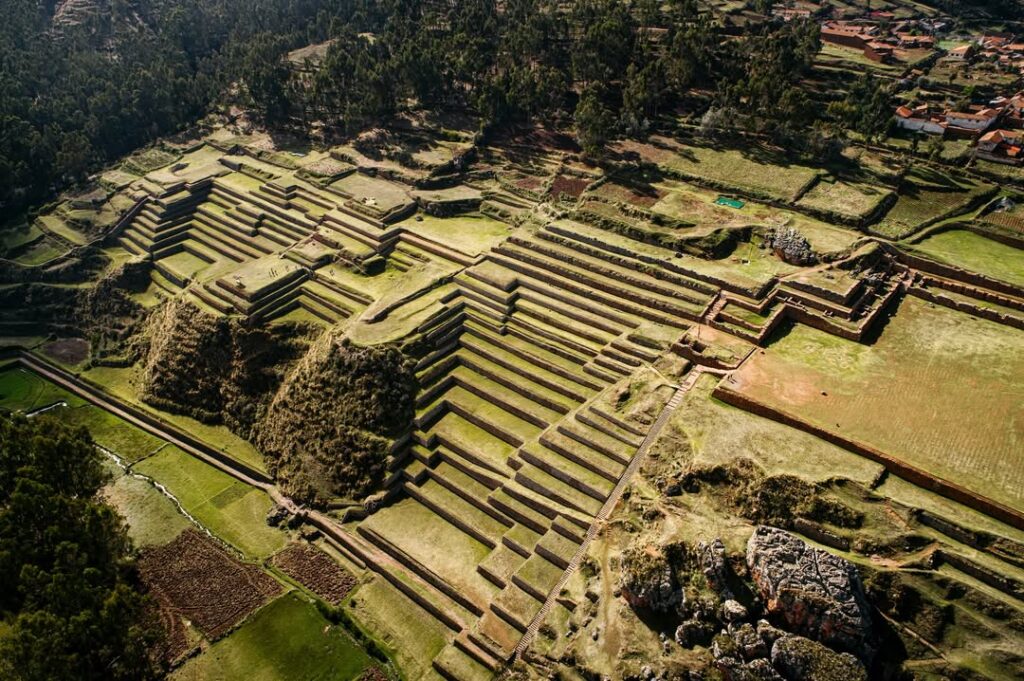
The area is distinguished by its agricultural terraces, which from a panoramic view reveal an extensive network of perfectly designed platforms. These structures not only beautify the landscape but also fulfill an essential function: taking advantage of fertile soils for agricultural production. Thanks to their ingenious construction, the ancient inhabitants managed to optimize cultivation at different levels, turning the place into a notable example of Andean agricultural engineering and a living testimony of the relationship between man and nature.
Textiles of Chinchero
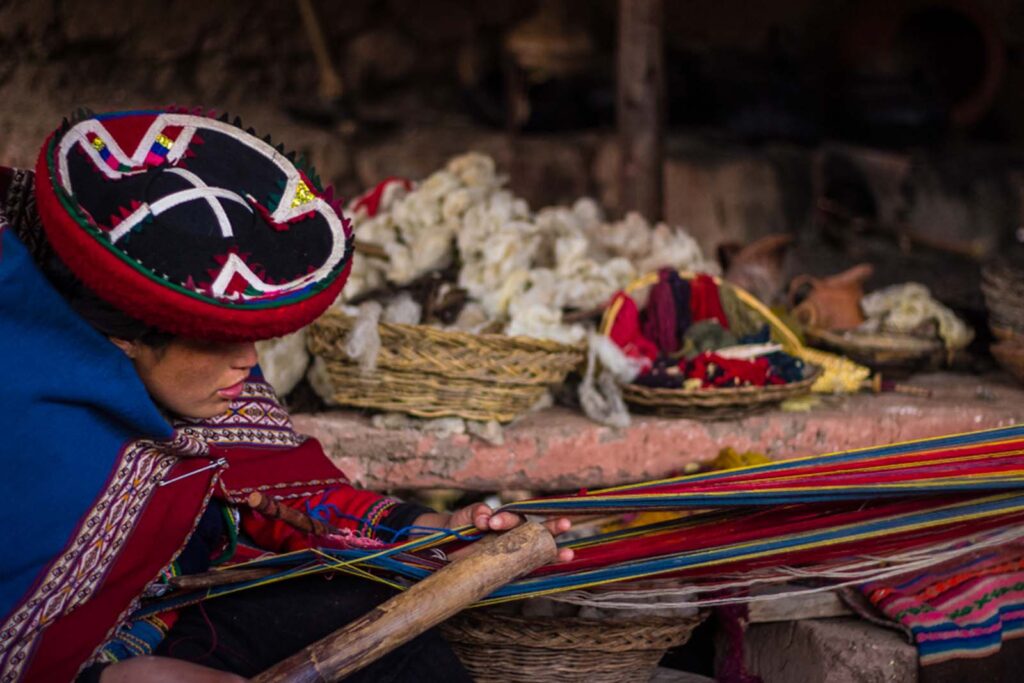
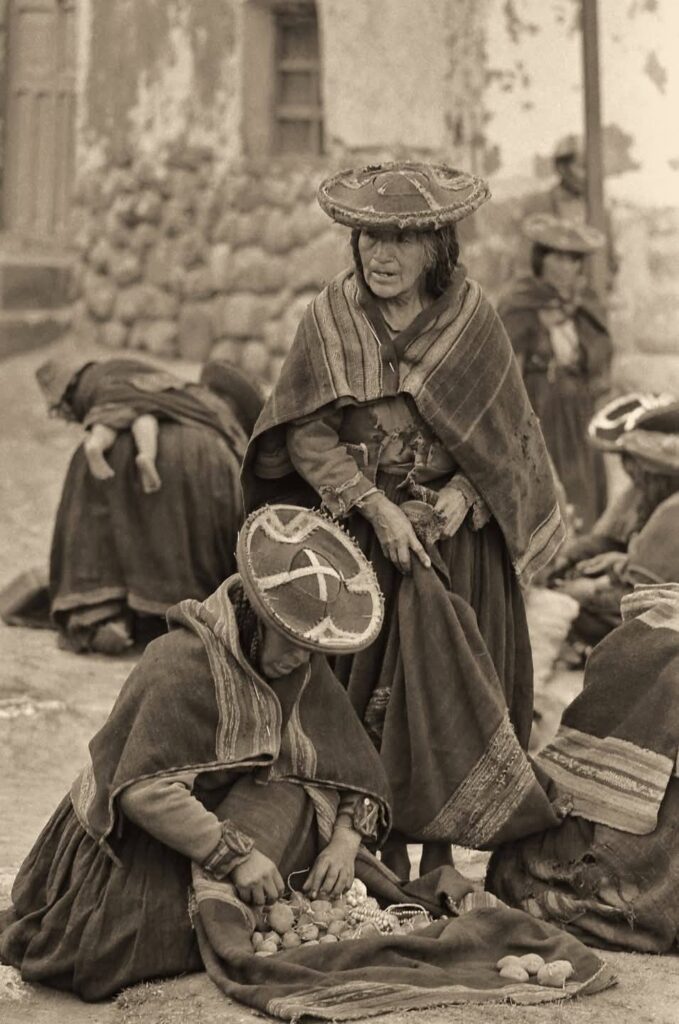
Traditional weaving is distinguished by its extraordinary variety of handcrafted fabrics, intense colors, and ancestral techniques that have been preserved for generations. The inhabitants dye sheep’s wool using natural dyes, such as cochineal to obtain red and pink tones, and various Andean plants that allow the creation of a wide range of organic, sustainable colors. Although today there is great chromatic diversity, in ancient times emblematic tones such as Indian red and black predominated, marking the textile identity of the community. Each garment, woven on a traditional loom, reflects history, culture, and a deep bond with Chinchero.
Chinchero also offers:
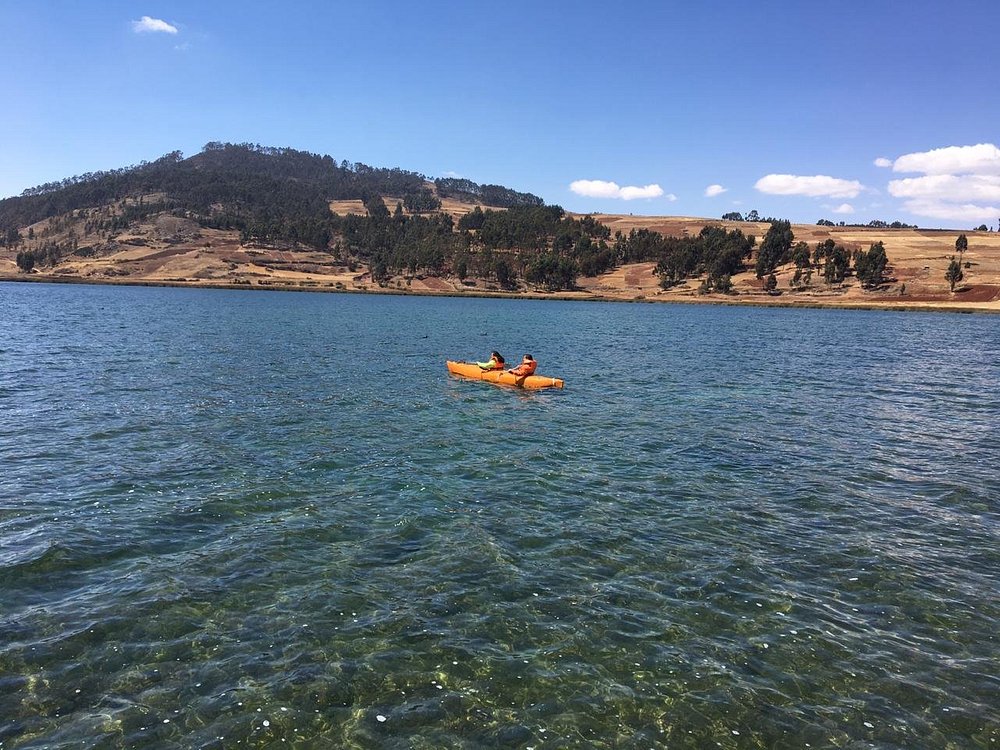
- Piuray Lagoon
- Huaypo Lagoon
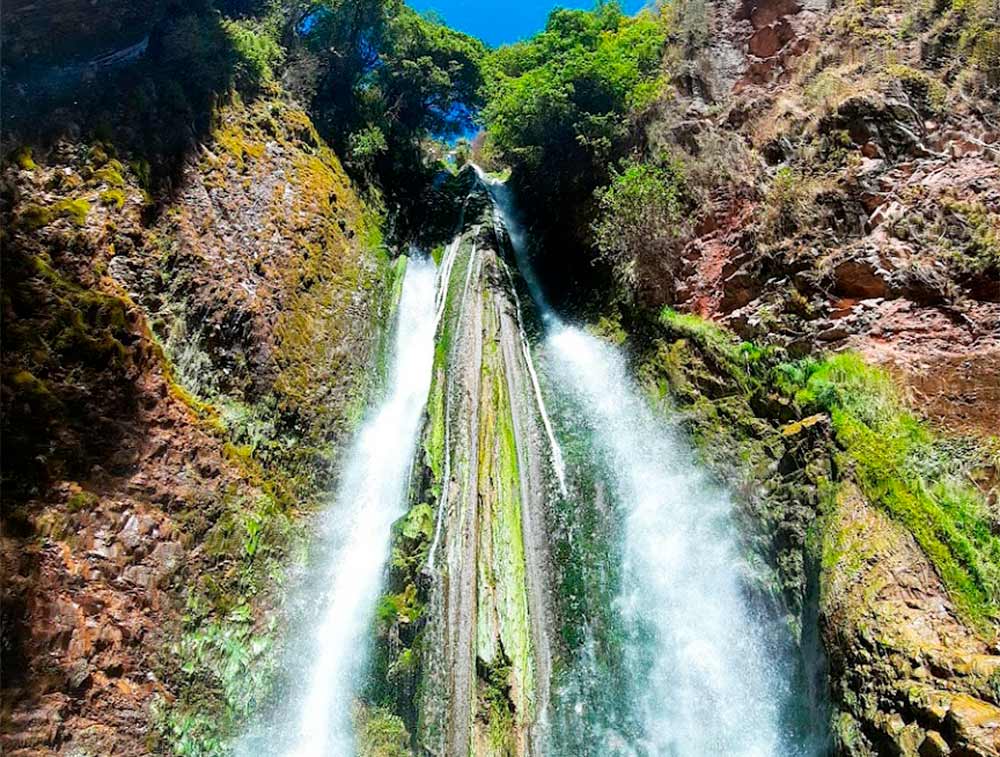
- Poc Poc Waterfall

Personal Opinion
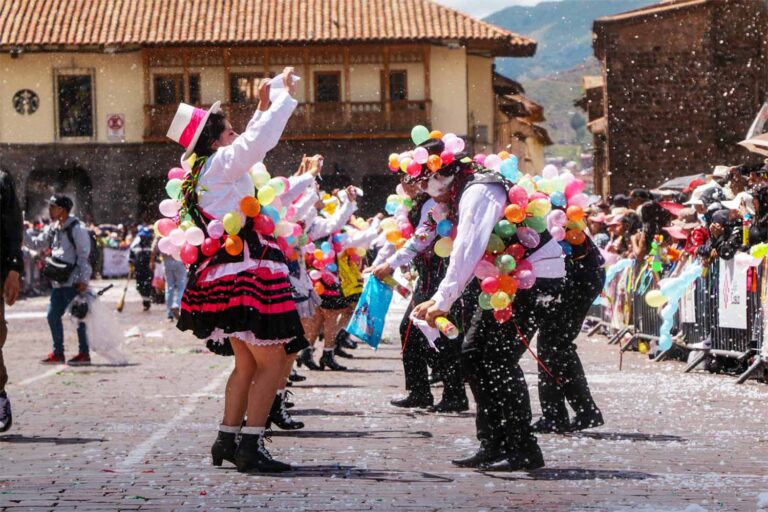
For years, customs have continued to prevail, but many others are being lost over time. A very visible change is traditional clothing. The original outfits we used to wear have been modified, incorporating too many colors and elements designed mainly for tourism. It is understood that tourism is an important source of income, but it should not be a justification for typical costumes to lose their authenticity and become commercial products. Clothing is an essential part of cultural identity, and its excessive transformation threatens to erase our roots.
As for the Archaeological Center of Chinchero, years ago excavations were carried out in which archaeological remains were observed. However, over time, these spaces were covered and turned into bridle paths leading to the Poc Poc waterfall. This fact represents a significant loss, as it makes part of our history invisible and limits access to a heritage that should be protected and disseminated.
Curious Fact
It should be mentioned that Chinchero is a district located in the province of Urubamba, within the department of Cusco, recognized for its Inca archaeological complex and its colonial temple, while Chincheros is a province of the department of Apurímac; although their names are similar, they represent different places with their own cultural identities, so it is important to differentiate them to avoid confusion when researching or planning a trip.
Conclusion
Chinchero is a tourist destination that meets all expectations to fully enjoy its cultural, historical, and natural wealth. In addition to walking through its streets full of tradition, visitors can participate in various activities that allow them to get to know more closely the identity of this town, from its typical clothing to its unique landscapes and its archaeological center.
Contact us:
With Life Expeditions, your dream trip to Peru becomes a reality. Specialists in the Inca Trail, Ausangate, Salkantay, and tailor-made packages, we take you to unique places such as:
Ready for a personalized adventure? Your adventure begins now!