
Qoyllur Rit’i – Amazing mystical path toward Cinajara
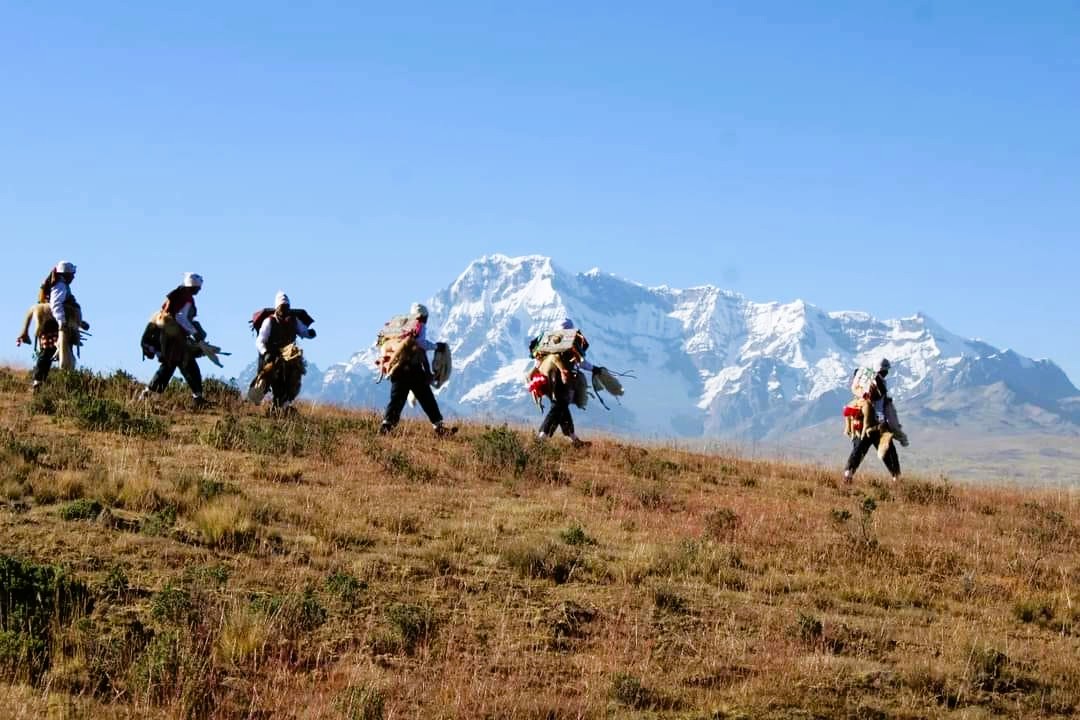
The pilgrimage to the Lord of Qoyllur Rit’i, celebrated every year between late May and early June at the Cinajara sanctuary in Cusco, is one of the largest and most sacred religious manifestations of the Andes. It gathers a vast multitude of pilgrims in a unique syncretism between Catholic faith and Andean traditions, with processions, dances, and rituals performed on the glaciers. The mystical path to Mount Cinajara is an adventure no traveler should miss when visiting Cusco: nature, culture, and spirituality in a single journey.

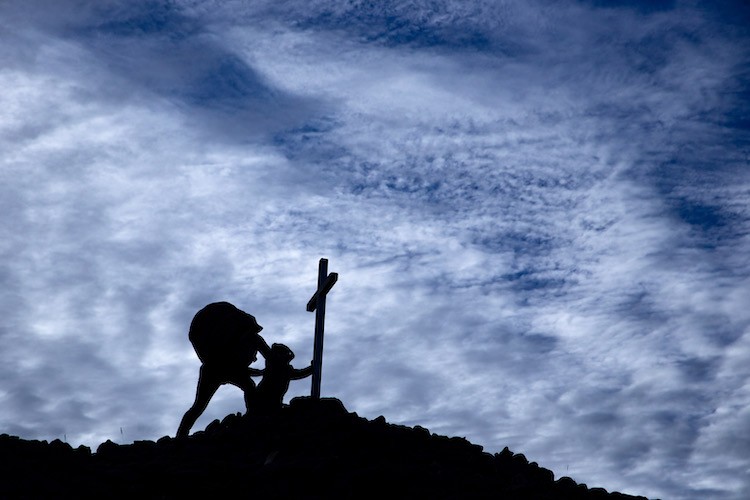
Recognized by UNESCO in 2011 as Intangible Cultural Heritage of Humanity, this festivity connects spirituality, culture, and nature, becoming both a symbol of community identity and a tourist attraction of great relevance. Above all, it is a celebration — a transformative encounter that reflects the living strength of the Andes.
Tabla de Contenidos
Location of Qoyllur Rit’i
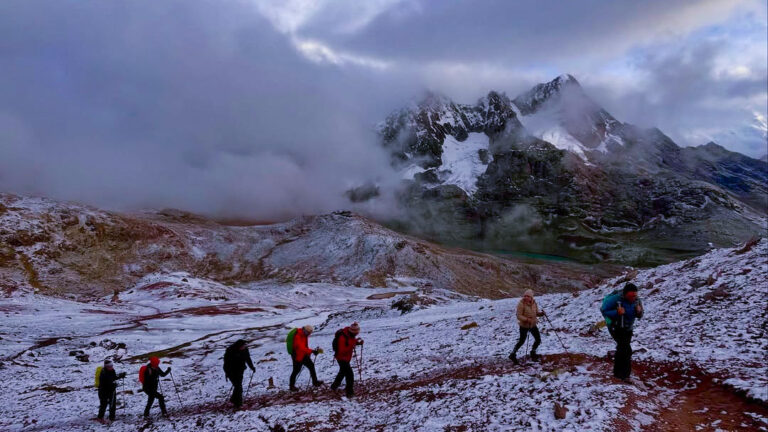
The Sanctuary of the Lord of Qoyllur Rit’i is located in the Cinajara paraje, in the district of Ocongate, province of Quispicanchi, Cusco, at more than 4,800 meters above sea level.
The pilgrimage begins in the town of Mahuayani, from where the faithful walk about 8 km to reach the sanctuary.
What does Qoyllur Rit’i mean?
Qoyllur Rit’i, two Quechua words, means “Star of Snow” or “Shining Snow.” It is the name of one of the most important pilgrimages of the Andes, celebrated in the Cinajara paraje, Ocongate, Quispicanchi, Cusco, Peru, at the foot of Mount Ausangate. The festivity combines Andean spirituality with Catholic devotion.
What is the history of the Lord of Qoyllur Rit’i?
In the district of Ocongate, Quispiqanchis, Cusco, a deeply symbolic rite is celebrated: although its visible expression is the image of Christ, its essence lies in the union of human beings with nature. This ritual, linked to the fertility of the land and the veneration of the Apus — the sacred mountains that protect communities — is part of one of the largest indigenous festivals in the Americas.
The main ceremony takes place at the foot of the imposing Mount Ausangate, where thousands of shepherds, merchants, and visitors gather at the Cinajara sanctuary to participate in the pilgrimage. Tradition tells that the Child Jesus, disguised as a humble shepherd boy, appeared to an indigenous child named Marianito Mayta, with whom he formed a friendship. When they were discovered wearing rich garments, the parents informed parish priest Pedro de Landa, who tried unsuccessfully to capture the Child. In his place, a rock appeared, while Marianito died instantly. Since then, the image of Qoyllur Rit’i remained engraved in the stone, becoming an eternal symbol of faith and devotion.
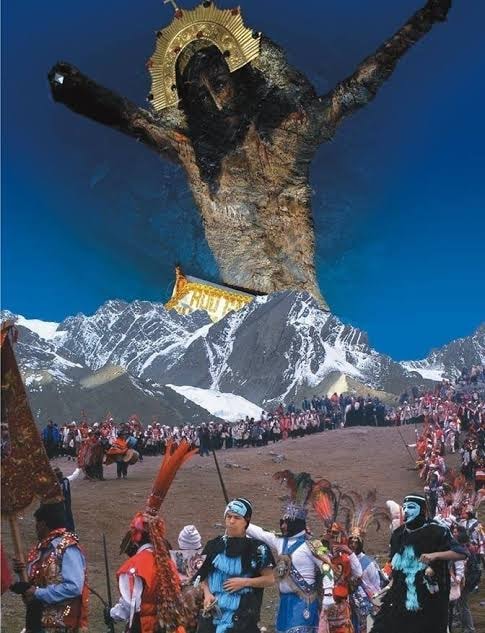
This story, blending myth, spirituality, and tradition, turns the pilgrimage into a unique experience: a meeting where Catholic faith and Andean worldview merge in a single heartbeat, attracting thousands of people who seek to live the magic and strength of the Andes.
On what day is Qoyllur Rit’i celebrated?
The festivity of the Lord of Qoyllur Rit’i varies each year, as it is linked to the lunar calendar and the celebration of Corpus Christi. Therefore, it usually takes place between May and June.
Syncretism in the Andes
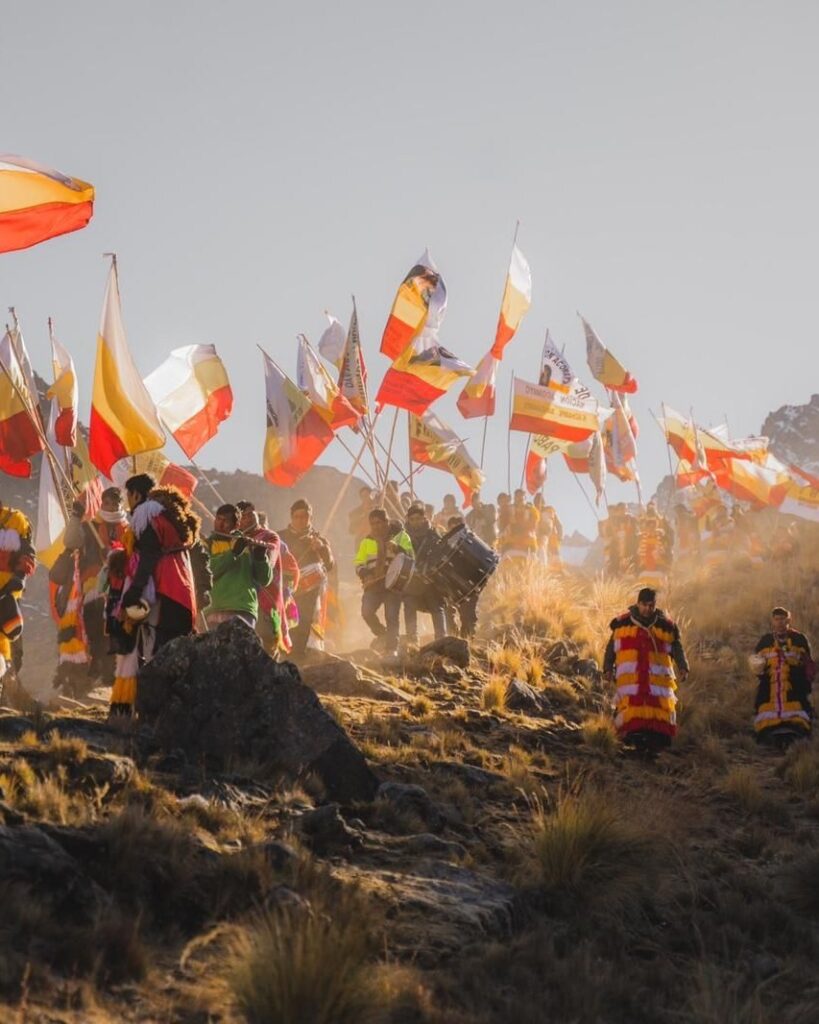
The festivity honors both the Lord of Qoyllur Rit’i and the Apus, the tutelary spirits of the mountains. In it, Catholic practices intertwine with the profound Andean worldview, giving rise to a unique syncretism where Christian faith coexists with ancestral respect for nature and the divinities of the Andes.
Traditional dances of Qoyllur Rit’i
- Qhapaq Qolla: Represent the merchants of the highlands, with costumes that evoke trade and Andean culture.
- Chunchos: Dancers of the jungle, symbolic guardians of the Virgin, with exuberant costumes and masks.
- Saqras: Mischievous spirits with colorful masks and acrobatics, who satirize and enliven the festivity.
- Qhapaq Negro: Recall the Afro-Peruvian heritage in the Andean region.
- Pablitos: Young men who wear distinctive costumes of their nation and maintain order, safeguarding tradition.
Conclusion
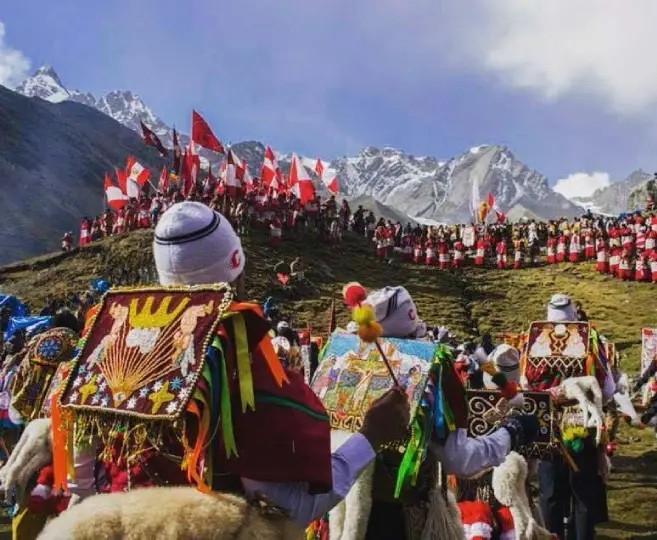
Qoyllur Rit’i is an Andean pilgrimage that brings together more than 100,000 people in a unique encounter of faith, culture, and nature. With solemn processions, traditional dances such as Qhapaq Qolla, Chunchos, and Ukukus, and purification rituals on the glaciers, this festivity offers travelers an authentic and transformative experience. In summary, it is more than a festival: it is an invitation to live the spirituality of the Andes and to discover a cultural heritage that moves and captivates.
Contact us:
With Life Expeditions, your dream trip to Peru becomes a reality. Specialists in the Inca Trail and tailor-made packages, we take you to unique places such as:
Ready for a personalized adventure? Your adventure begins now!